When planning to transform your home, you may come across two terms repeatedly: home renovation and interior design. Although they are closely connected, they serve different purposes. Understanding the difference can help you decide what your home actually needs and how to plan your project effectively.
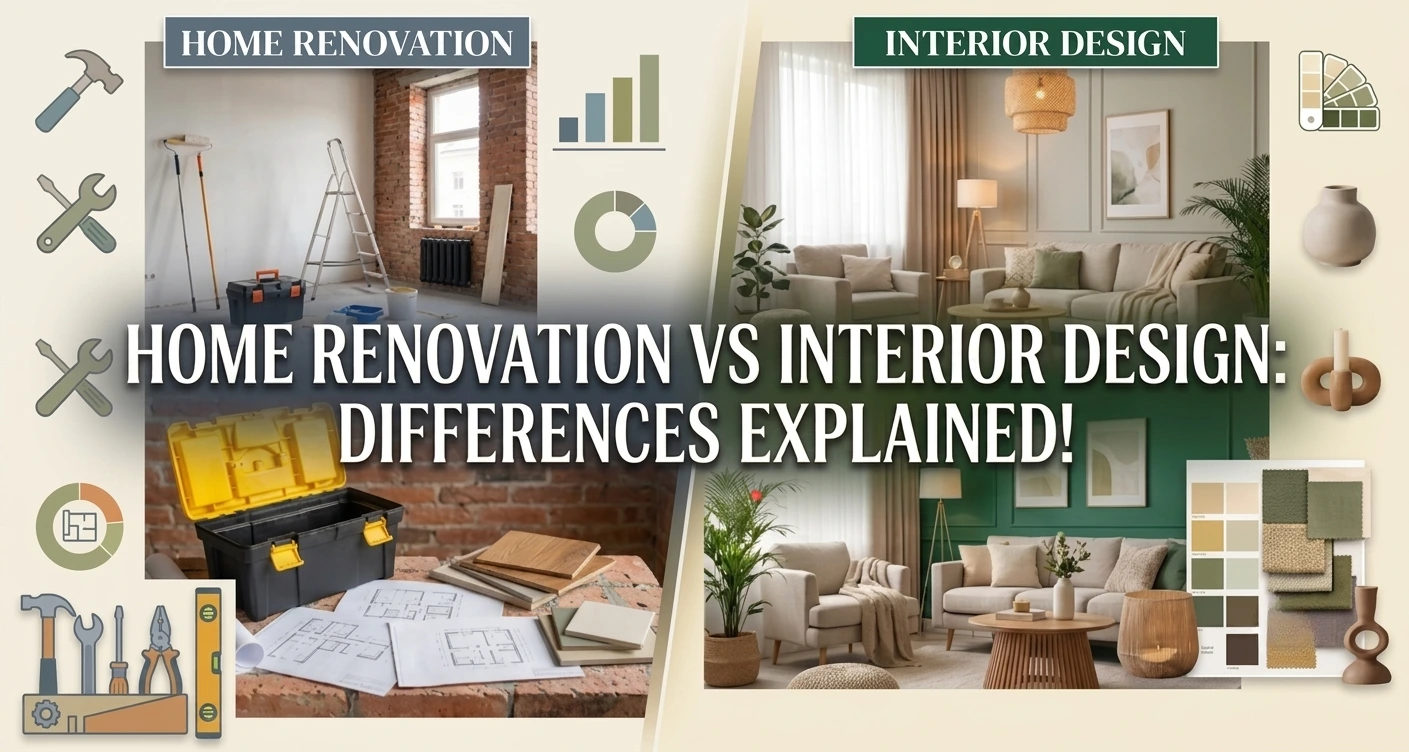
In simple terms, renovation focuses on improving, repairing, or changing the physical aspects of a home, while interior design focuses on creating a functional, comfortable, and visually appealing living environment. In many projects, both work together to achieve a complete transformation.
What Is Home Renovation?
Home renovation involves improving or changing existing parts of a property. The work can range from small upgrades to major changes that significantly alter the home.
Renovation may include:
- Replacing flooring or wall finishes
- Updating kitchens and bathrooms
- Changing doors and windows
- Upgrading electrical and plumbing systems
- Repainting walls and ceilings
- Modifying existing layouts
- Repairing damaged areas
- Improving storage and built-in elements
The main purpose of renovation is to improve the condition, usability, and overall value of the property. It is particularly useful when a home feels outdated, requires repairs, or no longer suits the homeowner’s lifestyle.
For example, an older apartment may need new flooring, updated electrical work, a modern kitchen, and improved bathroom finishes before it is ready for everyday living.
What Is Interior Design?
Interior design focuses on how the spaces inside a home look, feel, and function. It brings together elements such as layout, furniture, lighting, colours, materials, storage, and décor to create a cohesive environment.
An interior designer may help with:
- Space planning
- Furniture selection and placement
- Colour combinations
- Lighting concepts
- Custom furniture
- Storage solutions
- Wall and ceiling finishes
- Curtains, rugs, and décor
- Material and finish selection
Good interior design is not simply about making a home look beautiful. It also considers how people use each room.
For instance, a living room should provide comfortable seating and enough movement space, while a home office should support concentration and organisation. The goal is to balance aesthetics with everyday functionality.
Home Renovation vs Interior Design: Key Differences
The easiest way to understand the difference is to look at what each process primarily changes.
| Factor | Home Renovation | Interior Design |
| Main focus | Improving or changing the existing home | Designing the look and functionality |
| Typical work | Repairs, flooring, plumbing, electrical, civil work | Layout, furniture, lighting, colours, finishes |
| Structural changes | Can be involved | Usually limited |
| Main goal | Improve condition and usability | Improve comfort, appearance, and functionality |
| Professionals | Contractors and relevant specialists | Interior designers and design specialists |
| Final result | An upgraded physical space | A coordinated and personalized living environment |
Simply put, interior design vs renovation comes down to purpose: renovation focuses on what needs to be changed or improved, while interior design focuses on how the space should function, look, and feel.
Which One Does Your Home Need?
The right choice depends on the condition of your property and your goals.
Choose Home Renovation If:
- Your home has damaged or outdated areas.
- The kitchen or bathroom needs major upgrades.
- Flooring, doors, windows, or walls require replacement.
- Electrical or plumbing systems need improvement.
- You want to change parts of the existing layout.
- The property requires significant repairs before decorating.
Choose Interior Design If:
- Your home’s basic structure is already suitable.
- You want to improve the appearance of your rooms.
- Furniture feels unsuitable or poorly arranged.
- You need better storage and space utilisation.
- You want coordinated colours, lighting, and materials.
- You are creating a specific design style for your home.
Consider Both If:
Sometimes choosing only one isn’t enough. If you have purchased an older property, are moving into a new unfinished home, or want a complete transformation, combining renovation and interior design can be the better approach.
Can Renovation and Interior Design Be Done Together?
Yes. In fact, combining the two can make the overall transformation more coordinated.
Renovation can take care of the physical improvements, while interior design can establish the home’s overall visual direction and functionality. When these stages are planned together, decisions about flooring, lighting, storage, furniture, colours, and finishes can complement one another.
For example, if you are renovating a kitchen, the process can consider not only new cabinets and flooring but also lighting, storage, countertop finishes, appliances, and how the kitchen connects with the rest of the home.
This integrated approach can reduce design conflicts and create a more consistent result.
What Does a Home Renovation and Interior Design Project Include?
Every project is different, but a well-planned home transformation often follows a similar sequence:
- Initial consultation: Understand the homeowner’s lifestyle, preferences, requirements, and budget.
- Site assessment: Evaluate the existing space and identify areas that need improvement.
- Space planning: Determine how rooms, furniture, storage, and movement should work together.
- Design development: Establish the overall style, materials, colours, and finishes.
- Renovation work: Complete required repairs, upgrades, and physical changes.
- Furniture and finishing: Add furniture, lighting, décor, storage, and other finishing elements.
- Final review: Check the completed space and ensure the design meets the agreed requirements.
Planning these stages carefully can make the process easier to manage and help homeowners make informed decisions.
What Affects the Cost?
There is no single cost for a renovation or interior design project because every home has different requirements.
The overall investment may depend on:
- Size of the property
- Extent of renovation required
- Quality of materials and finishes
- Amount of custom furniture
- Number of rooms being redesigned
- Complexity of the design
- Electrical, plumbing, or civil work
- Level of detailing and customisation
Instead of comparing projects based only on price, homeowners should consider what is included in the scope, the quality of materials, project management, workmanship, and expected outcome.
How to Choose the Right Professional
Start by clearly defining what you want to change. If the primary requirement is repairing or upgrading the property, renovation professionals may be the starting point. If your home needs a cohesive layout, aesthetic direction, furniture planning, and personalised design, an interior designer may be more appropriate.
Before making a decision, review relevant project portfolios, understand the services included, ask about timelines, and clarify who will coordinate different aspects of the work.
Experience with projects similar to yours can also be valuable because it gives you a better understanding of how the professional approaches real-world challenges.
Why Professional Planning Matters
A home transformation involves many individual decisions. Without proper planning, choices made for one room can conflict with decisions made elsewhere.
Professional planning helps bring these elements together. From space utilisation and material selection to furniture placement and lighting, each decision can contribute to a more balanced result.
It can also make coordination easier when multiple teams or specialists are involved, helping homeowners maintain a clear direction throughout the project.
Conclusion
Home renovation and interior design may overlap, but they serve different purposes in transforming a property. Renovation focuses on improving the physical condition, structure, and usability of a home, while interior design shapes its functionality, aesthetics, comfort, and overall character.
Understanding these differences can help you determine whether your home needs renovation, interior design, or a combination of both. With thoughtful planning and professional guidance, you can create a space that is practical, visually appealing, and suited to your lifestyle.
If you’re planning a complete home transformation, Shivam Craft Studio brings together thoughtful interior design, renovation planning, and detailed execution to create spaces that feel both refined and personal.
Frequently Asked Questions
1. Can interior designers do renovations?
Yes, many interior designers can manage renovation projects through turnkey or end-to-end services. They may coordinate civil work, electrical, plumbing, finishes, furniture, and execution while maintaining the overall design vision.
2. What is the difference between interior design and renovation?
Interior design focuses on planning the look, functionality, layout, furniture, lighting, and finishes of a space. Renovation focuses on repairing, upgrading, or changing the home’s physical elements.
3. Do I need an interior designer for a home renovation?
You may not always need one, but an interior designer can be valuable for larger renovations involving layout planning, materials, furniture, lighting, storage, and coordination between different aspects of the project.
4. Does interior design include civil work?
Interior design does not always include civil work, but some interior designers offer turnkey services that cover renovation, civil modifications, electrical work, plumbing, finishes, furniture, and final execution under one project.
5. Does interior design include civil work?
Interior design does not always include civil work, but some interior designers offer turnkey services that cover renovation, civil modifications, electrical work, plumbing, finishes, furniture, and final execution under one project.