Your home should reflect your personality, lifestyle, and everyday needs, not simply follow a passing design trend. Choosing the right interior designer can make the difference between a home that looks beautiful and one that feels genuinely comfortable and functional.
With so many designers and studios available, knowing where to begin can feel overwhelming. From reviewing portfolios and discussing budgets to understanding communication styles and project timelines, several factors deserve attention before you make your decision. Here is a practical guide to help you choose an interior designer who understands your vision and can bring it to life.
1. Understand Your Interior Design Needs
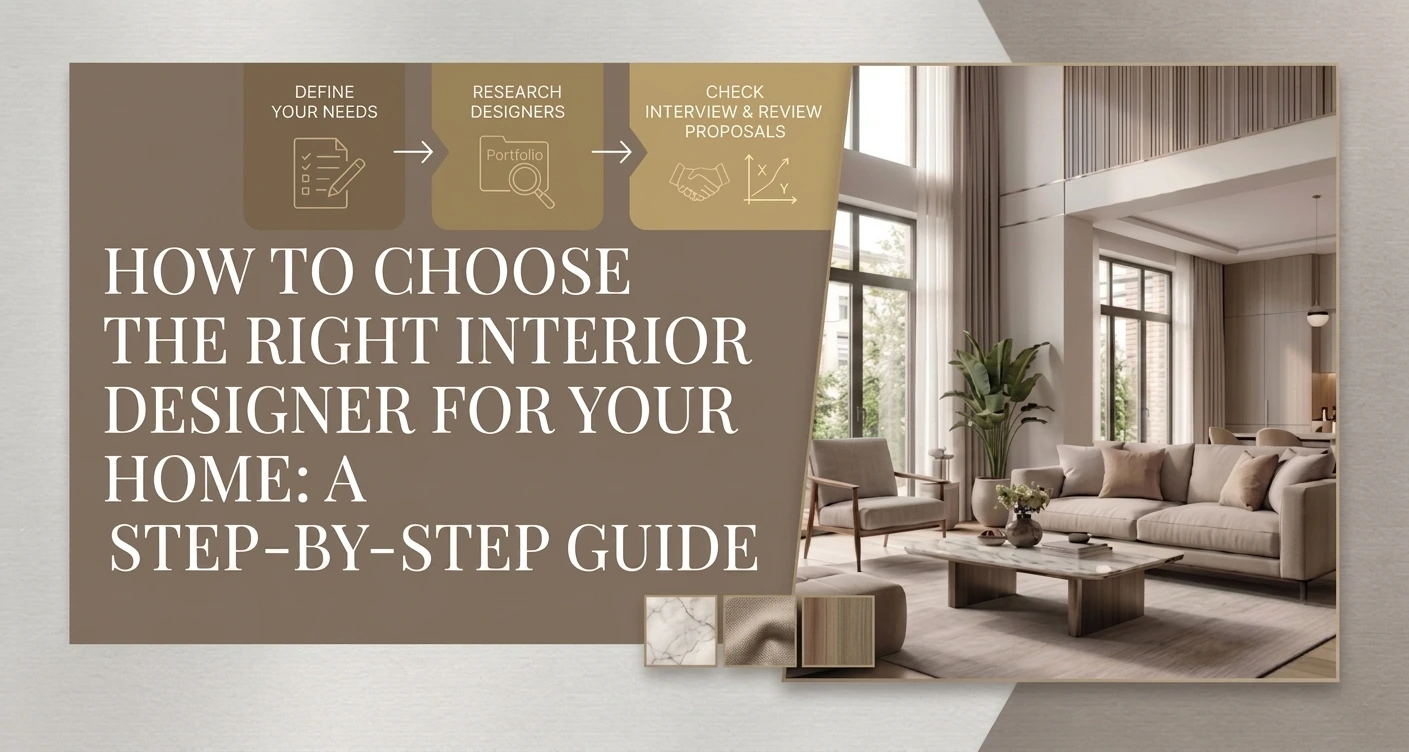
Before contacting designers, take some time to understand what you want from your home. Think about the rooms you want to renovate, your preferred colours and styles, storage requirements, lifestyle, and the overall atmosphere you want to create.
Also decide whether you need help with design alone or want a complete service that includes materials, coordination, execution, and project management. Having a clear idea of your requirements makes it easier to communicate your expectations and compare different designers.
2. Research and Shortlist Interior Designers
Start by researching designers and interior design studios through their websites, portfolios, social media profiles, and relevant online platforms. Look for professionals who have experience working on projects similar to yours.
Instead of choosing the first designer you find, create a shortlist of around three to five options. This gives you an opportunity to compare their design styles, experience, services, communication, and approach to projects.
If you are searching for the best interior designer for home, remember that the right choice is not necessarily the most popular or expensive one. It is the designer whose expertise and approach align with your requirements.
3. Review Their Portfolio Carefully
A portfolio gives you an insight into a designer’s creativity, attention to detail, and experience. However, don’t look only at whether the photographs are attractive.
Pay attention to how spaces are planned and whether the designs appear practical. Look at furniture placement, lighting, storage, materials, colour combinations, and overall flow.
Try to find projects that resemble your home’s size, layout, or style. A designer experienced in creating luxury villas, for example, may have a different approach from someone who primarily works on compact city apartments.
4. Check Their Experience and Expertise
Experience matters because interior design involves much more than selecting furniture and colours. An experienced professional understands how to work within different spaces, coordinate materials, manage practical requirements, and deal with challenges during execution.
Ask about their experience with residential projects and whether they have worked on properties similar to yours. You can also ask how involved they remain during execution and who coordinates contractors, suppliers, and other professionals.
A strong combination of design knowledge and practical project experience can help reduce unnecessary complications later.
5. Discuss Your Budget and Expectations
Budget should be discussed early rather than at the end of the design process. Share a realistic budget with the designer and ask what can be achieved within it.
Make sure you understand what the quoted amount covers. Depending on the project, costs may involve design services, materials, furniture, labour, lighting, electrical work, civil work, and other requirements.
Don’t automatically choose the lowest quote. A significantly lower estimate may leave important elements out or result in compromises later. Look for clear communication about costs and a proposal that matches your expectations.
6. Ask the Right Questions Before Hiring
A consultation is an opportunity to understand how a designer works. Don’t hesitate to ask practical questions before making a commitment.
Some useful questions include:
- What is your design process?
- Have you completed projects similar to mine?
- What services are included?
- Who will manage the project during execution?
- How many design revisions are included?
- What is the estimated timeline?
- How are material selections handled?
- How are additional costs communicated?
- What happens if there are delays or changes?
The answers can reveal how organised, transparent, and experienced the designer is.
7. Evaluate Communication and Design Approach
Good communication is one of the most important parts of a successful interior project. Your designer should listen carefully to your ideas rather than simply imposing their preferred style.
During your initial discussions, notice whether they understand your lifestyle, priorities, and concerns. A good designer should be able to explain ideas clearly and offer suggestions while still respecting your preferences.
You should also feel comfortable asking questions. Interior design is a collaborative process, and trust between the homeowner and designer can make the entire experience smoother.
8. Understand the Interior Design Process
Every designer may have a slightly different workflow, but a typical residential project can include several stages:
Consultation → Space Planning → Concept Development → Design Finalisation → Material Selection → Visualisation → Execution → Final Handover
Understanding these stages helps you know what to expect. Ask your designer when important decisions need to be made and how changes are handled throughout the project.
A clearly defined process can also help keep the project organised and reduce misunderstandings.
9. Compare Proposals Before Making a Decision
Once you have shortlisted a few designers, compare their proposals carefully. Don’t compare prices alone.
Look at the overall scope of work, design deliverables, materials, estimated timeline, execution responsibilities, project management, and payment structure.
Two proposals with different prices may offer very different levels of service. A slightly higher investment could provide better planning, materials, coordination, and execution.
Choose the proposal that offers the right balance between quality, transparency, design expertise, and value.
10. Look for the Right Balance of Creativity and Functionality
A beautiful home should also work well for everyday life. A designer should understand how your family uses the space and incorporate practical solutions into the design.
Consider whether the proposed design provides sufficient storage, comfortable movement, appropriate lighting, useful furniture placement, and easy maintenance.
Trends can inspire a design, but your home should not become outdated simply because a particular trend fades. Look for a designer who can create spaces that feel contemporary while retaining a timeless quality.
11. Watch for Red Flags
Before hiring an interior designer, be aware of warning signs that could create problems later.
Be cautious if a designer:
- Has little or no relevant portfolio
- Avoids discussing costs clearly
- Makes unrealistic promises
- Pressures you to make a quick decision
- Does not provide a clear scope of work
- Has poor communication
- Cannot explain the project timeline
- Provides unclear payment terms
Trust your instincts if something doesn’t feel right. Choosing a designer is a significant decision, and taking additional time to evaluate your options can be worthwhile.
A Simple Checklist Before You Hire
Before finalising your interior designer, ask yourself:
- Does their portfolio match my preferred design direction?
- Do they have experience with projects similar to mine?
- Have they understood my lifestyle and requirements?
- Is the pricing and scope of work clear?
- Do I feel comfortable communicating with them?
- Is there a defined process and realistic timeline?
- Are execution responsibilities clearly explained?
If the answer is yes to most of these questions, you are likely moving towards a more informed decision.
Conclusion
Choosing the right interior designer is about finding someone who can understand your vision while balancing beauty, functionality, budget, and practical execution. Take time to research your options, review portfolios, ask meaningful questions, compare proposals, and assess communication before making your final decision.
For homeowners looking for a thoughtful balance of refined design, functionality, and personalised interiors, Shivam Craft Studio can be a strong choice. Their approach focuses on creating spaces that feel distinctive while remaining practical and comfortable for everyday living.
The right designer should not simply create a visually appealing home. They should help shape a space that feels personal, comfortable, functional, and thoughtfully designed for the way you live.
Frequently Asked Questions
1. How can I choose the right interior design style for my home?
Choose an interior design style based on your lifestyle, personal preferences, home’s architecture, space, and budget. Review different styles and select one that feels comfortable, practical, and timeless.
2.What are three features of a good house?
Three essential features of a good house are functionality, comfort, and thoughtful space planning. A well-designed home should support everyday living while providing practical storage, natural light, and comfortable movement.
3. How to make a living room look luxurious?
Make a living room look luxurious with a refined colour palette, quality materials, layered lighting, elegant furniture, thoughtful accessories, and uncluttered spaces. Consistent detailing can create a sophisticated overall appearance.
4. What makes a house stylish?
A stylish house combines cohesive colours, well-proportioned furniture, suitable lighting, quality finishes, and personalised details. The key is creating visual harmony while ensuring the space remains functional and comfortable.
5. Should I choose an interior designer based on their portfolio?
Yes, a portfolio is an important factor when choosing an interior designer. Review projects similar to yours, but also consider their experience, communication, pricing transparency, design process, and execution capabilities.